The Law Protects Your Work Photographs
The Independent Maker's Self-Defense Notebook - Finding, Stopping, and Preventing Photo Theft
*Isamu Hibari / Alaudae.JP*
Introduction: One Day, Your Photo on a Site You Have Never Seen
In the previous article (Your Work Is Yours, Even If Nobody Knows You Yet), we talked about protecting your ideas and construction details with dated records. This time, as a sequel, let us talk about your work photographs.
Have you ever heard a story like this? One day, while searching the web, someone spots a familiar photograph on an unknown shopping site. Looking closer, it is their own photo of their own work. And it is being sold as a "product" by a complete stranger.
Sadly, this is not a rare story. Photographs by handcraft makers are copied without permission onto overseas shopping sites and social media accounts, and used for fake listings of products that do not actually exist. Such cases have been reported for years. The more beautifully a photo is taken, the more likely it is to be targeted.
But let me give you the conclusion first. When it comes to photographs, you are in a much stronger position than you may think. Unlike the story of ideas in Part 1, a photograph is your clear legal right. In this article, we will look at why that is, and then at how to find theft, how to respond, and how to prevent it.
As before: I am not a lawyer. This article is based on my experience and research as a working craftsperson and is not legal advice. For serious cases, please consult a professional.
The First Thing to Know: A Photograph Is Yours from the Moment You Take It
In Part 1, I explained that weaving methods and techniques themselves are not protected by copyright. Photographs are the exact opposite.
The moment you press the shutter, copyright in your work photograph comes into existence. No registration, no application, no fee, not even a copyright mark is required. Under Japanese copyright law, a photograph is protected as a work the instant it is taken, and this is the same in almost every country in the world (through an international treaty called the Berne Convention).
In other words:
- Copying and using your photograph without your permission is illegal
- It stays illegal even if the other party is a large company, even if they are overseas, and even if they claim they "thought it was a free image"
- Your rights are just as strong even if you are unknown and have never sold a single piece
In the world of ideas, all we could protect was how things look. In the world of photographs, the law stands on your side. You may respond with your head held high.
One aside. Most of the images used on my own sites and blog are not free materials: they are paid for. Partly because it saves time compared to producing them myself, but above all because I encounter work far better than anything I could have imagined on my own. If a photograph belongs to the person who took it, then paying for that work is only natural. That is my own way of practicing what this article preaches.
How to Find Theft: The Habit of Reverse Image Search
You cannot respond to theft you have not found. Fortunately, there is a free method that takes only a few minutes.
Google Lens (reverse image search)
- On a computer, open Google Images (images.google.com) and click the camera icon
- Upload (or drag in) the photo of your work that you want to check
- A list of pages where that photograph appears will be shown
On a smartphone, you can do the same from the camera icon (Google Lens) in the Google app. Make it a habit to check your most representative work photos this way once every few months. It does not have to be all of them. Your most popular photo, your best shot: if anything gets stolen, it will be those first.
Bing also has a similar image search, and it sometimes finds copies that Google does not. If you have the time, use both.
When You Find Theft: Stay Calm and Follow the Order
If you do find something, you will probably be shaken. But as long as you do things in the right order, you will be fine.
Step 1: Preserve the evidence first (before any takedown request)
If you contact the other party first, they may delete everything, evidence included, and pretend nothing ever happened. Before making contact:
- Take screenshots of the entire page (in a form that shows the URL and the date)
- If possible, save the page with archive.today (archive.ph), a third-party dated preservation service of the same kind as the Wayback Machine we met in Part 1
Here again, dated records become your weapon. The thinking from Part 1 applies exactly as it is.
Step 2: Use the platform's copyright infringement report form
In most cases, you do not need to deal with the infringer directly. Instead, go to the place where the copy is hosted. Meta (for Instagram and Facebook), Etsy, Amazon, eBay, Shopify: every major platform has a copyright infringement report form. Searching for the service name together with "copyright infringement report" will lead you to the official channel.
The report will usually ask you to explain that you are the rights holder and to give the URL of the original (the page on your own site or social media). And here, anyone who kept dated creation records using the methods of Part 1 has an overwhelming advantage. You can show, with third-party dates, that your page was published first.
Step 3: If nothing moves
With malicious overseas sites, reports are sometimes ignored. In that case, your options include a removal request to search engines (Google has a channel for requesting that infringing content be removed from search results), and, if the damage is serious, consulting a professional. But most cases are resolved by Step 2. You do not need to fight every battle. Your time belongs to your craft.
On Prevention: Watermarks, and the Trump Card of Original Data
If you use a watermark, place it where it is hard to remove
A small logo in the corner of a photo is easily cropped away. If you add a watermark, the basic rule is to place it lightly across the work itself. But a watermark always trades away some of the beauty of the photograph. There is no need to put one on everything at the cost of your sales photos. A practical compromise, such as "only on signature pieces" or "only on social media versions," is enough.
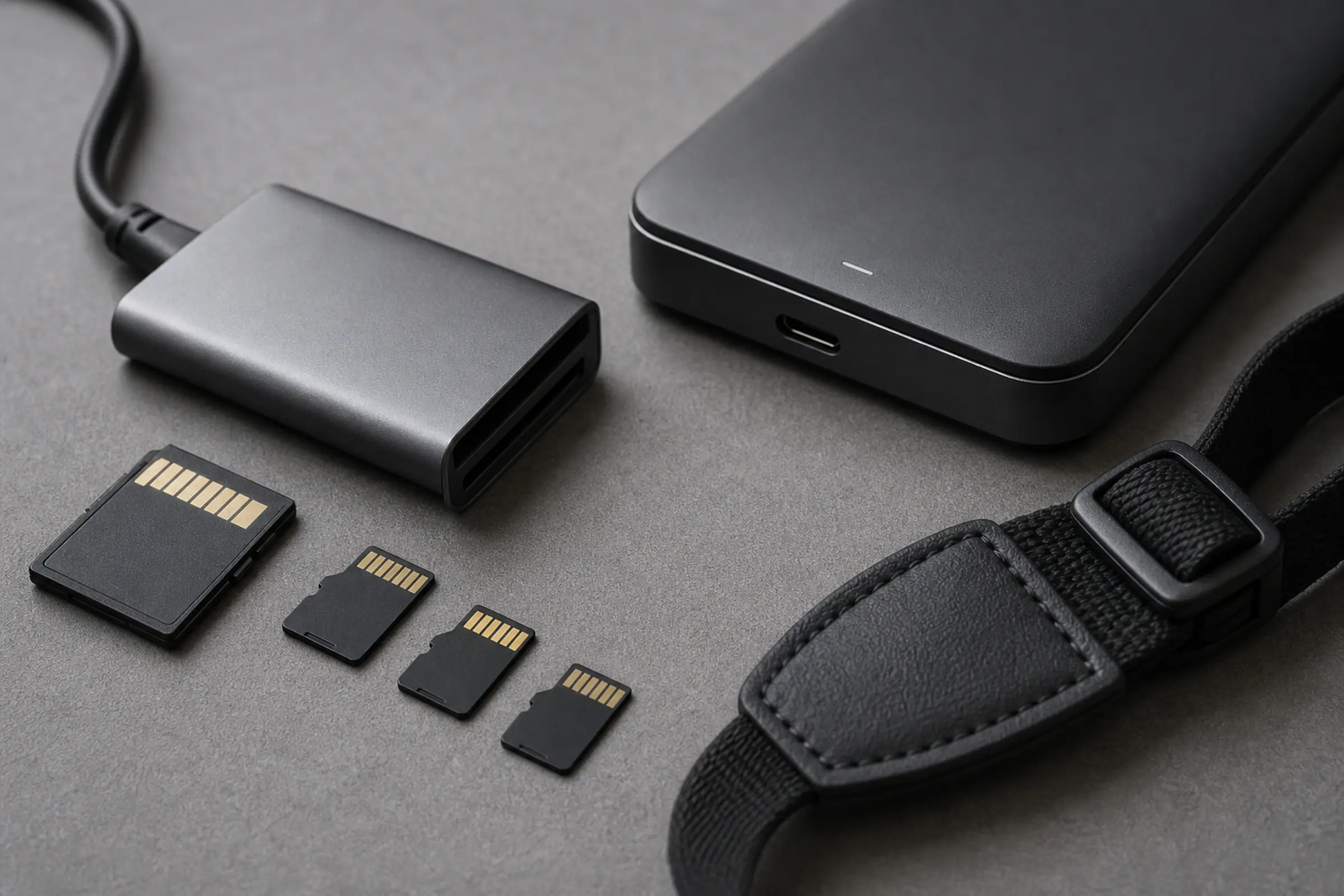
Your real trump card is holding the original data
All the infringer has is a shrunken JPEG from the web. In your hands, you have:
- The original data from the shoot (high resolution, before cropping)
- EXIF information (embedded data recording the date, time, and camera model)
- Other shots of the same scene, including the blurry failures
These are things an infringer can never produce. They are the strongest possible proof that you are the photographer. **Never delete the original data of your work photos.** And do not throw away the failed shots either. Only the person who actually took the pictures holds the other frames of the burst.
Closing: Hold a Strong Right, Quietly
To summarize:
- A photograph is yours from the moment you take it. No registration, no fees
- Every few months, run a reverse image search on your signature photos
- If you find theft, preserve evidence before making contact. Respond through the platform's report form
- Original data and failed shots are your trump card as the photographer. Keep them
Put together with Part 1, it comes to this: protect your ideas with records, and protect your photographs with rights. Neither costs money. All they cost is a small habit.
Keep that reassurance in the back of your mind, and carry on with the joy of making.